Creating an online training course on The Global Health Network is an impactful way to share expertise, foster collaboration, and support global health initiatives. This guide will walk you through the essential steps to develop a high-quality course, from planning and structuring content to utilizing the platform's tools for engaging, interactive learning. Whether you’re looking to train healthcare professionals, researchers, or students, this guide provides practical insights to effectively share knowledge and drive positive change in global health.
2: Contents
The content must be received in a Word or PDF document. Aim for around 3000-5000 words per module.
What should learners know, what skills should they have or what attitude or approach should they have once they have completed your course? Make sure it connects to the Learning Objectives. Do not stray away from the objective of the course by sharing irrelevant information or information that is too advanced/too easy for your target audience. Use language that is easy to understand and follow.
We use multiple choice questions (MCQs) to test the degree to which learning objectives have been attained.
Classic and timeless It is important to future-proof your training content. This ensures that future learners find your training materials meaningful and up-to-date. Maintaining this relevancy is also crucial for sustainability, as reaching out to original authors for updates can be time-consuming. The updating process may temporarily limit learner access until revisions are complete.
Case Studies Use local examples – make your content relevant to the area you are in or targeting to show, for example, how certain protocols have worked well. Proofreading and QA process Once we receive the material, we will look at the structure and make relevant changes to make sure it flows well in our Content Management System (CMS). We will not make any changes to the content during this process, as our job is to just work on structure and formatting. We may suggest alternative images, or suggest changes in the quiz questions. Peer-review – We highly advise you send out your materials to experts in the field for peer-review before you send it to us. This is for quality assurance and a seal of high quality. We may be able to suggest some peer-reviewers in some cases. Logos |
3: Images, Video and Audio
Images Please provide all course images in a separate zipped folder. Save images in corresponding folders for each module. This makes locating the images easier for us. Try to ensure the images are high resolution and original preferably in png format. Other formats are acceptable as long as the image is not blurred or hard to read. Ensure you have permission to share all images/figures. Using a copyrighted image without permission can result in fines. Please read here for more information about copyright and acknowledging the creator. Please read here for more information about how to check an image’s copyright owner. Video and Audio We can host videos/audios of any size via our YouTube channel. Save videos/audio in files the same way as the images per module. We can accept most video formats supported by YouTube, such as .MP4, .MPG, .WMV. Sharing via OneDrive, Google Drive is recommended. Audio files can also be used to share content. Please make sure audio files are of high quality, speech is clear, and does not sound muffled. |
4: Copyright and Open Access
The Global Health Training Centre is proud to host Open Access courses that are accessible to all for free. Training content hosted on TGHN includes the following text as standard on the course landing page: 'These e-learning materials are owned by The Global Health Network. You are free to share or adapt this material but you must attribute it to The Global Health Network using the link www.theglobalhealthnetwork.org.' This equates to a For more information about Creative Commons (CC) Licenses please see: https://creativecommons.org/about/cclicenses/ or for help with which license to use, access the Creative Commons license chooser tool. |
 licence. Course creators and organisations who choose to share materials on The Global Health Network are welcome to suggest alternative CC licence terms if they wish and the above standard text can be edited accordingly.
Appendices
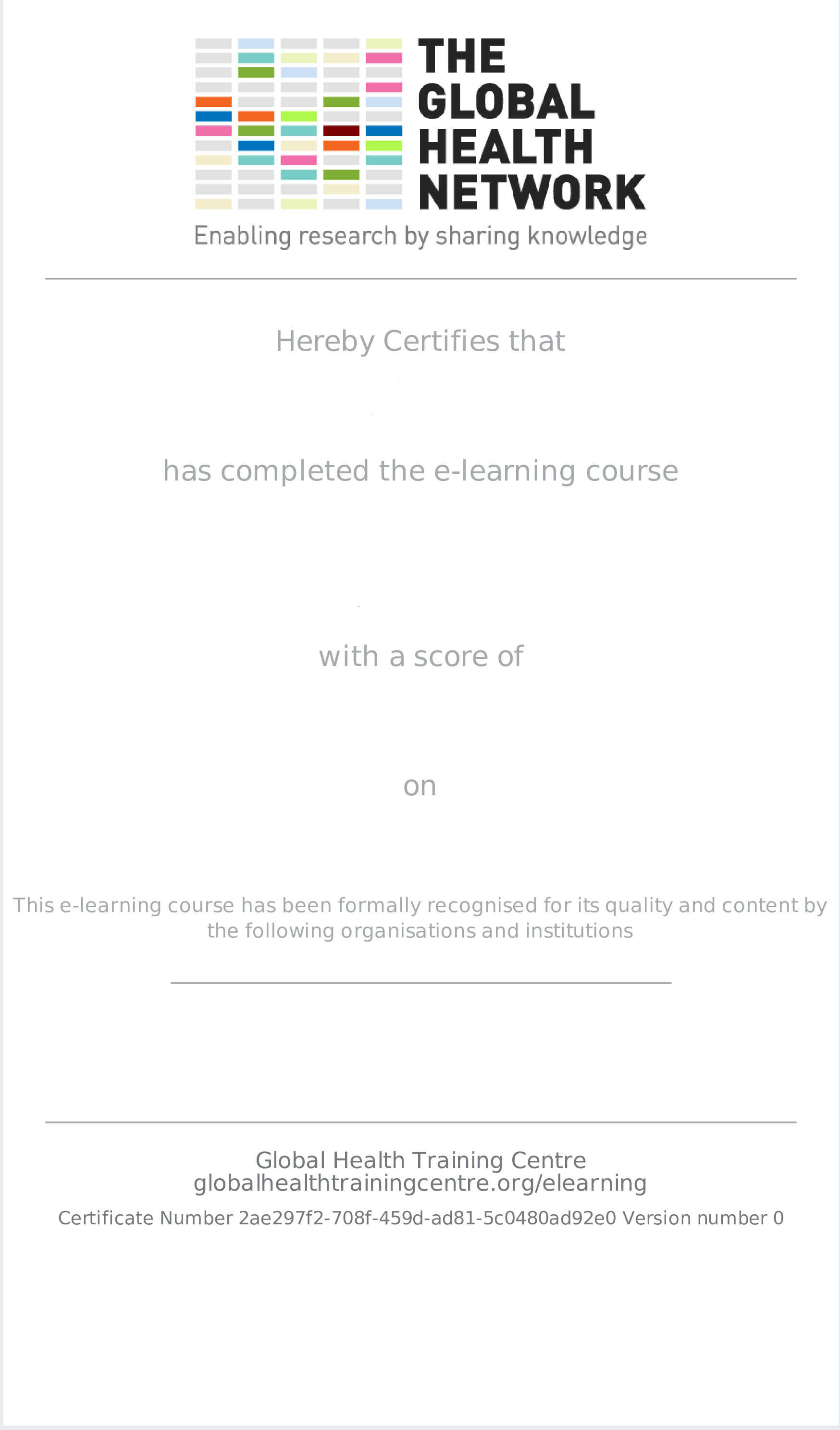
Appendix 1 - Sample of course certificate (Click to enlarge)
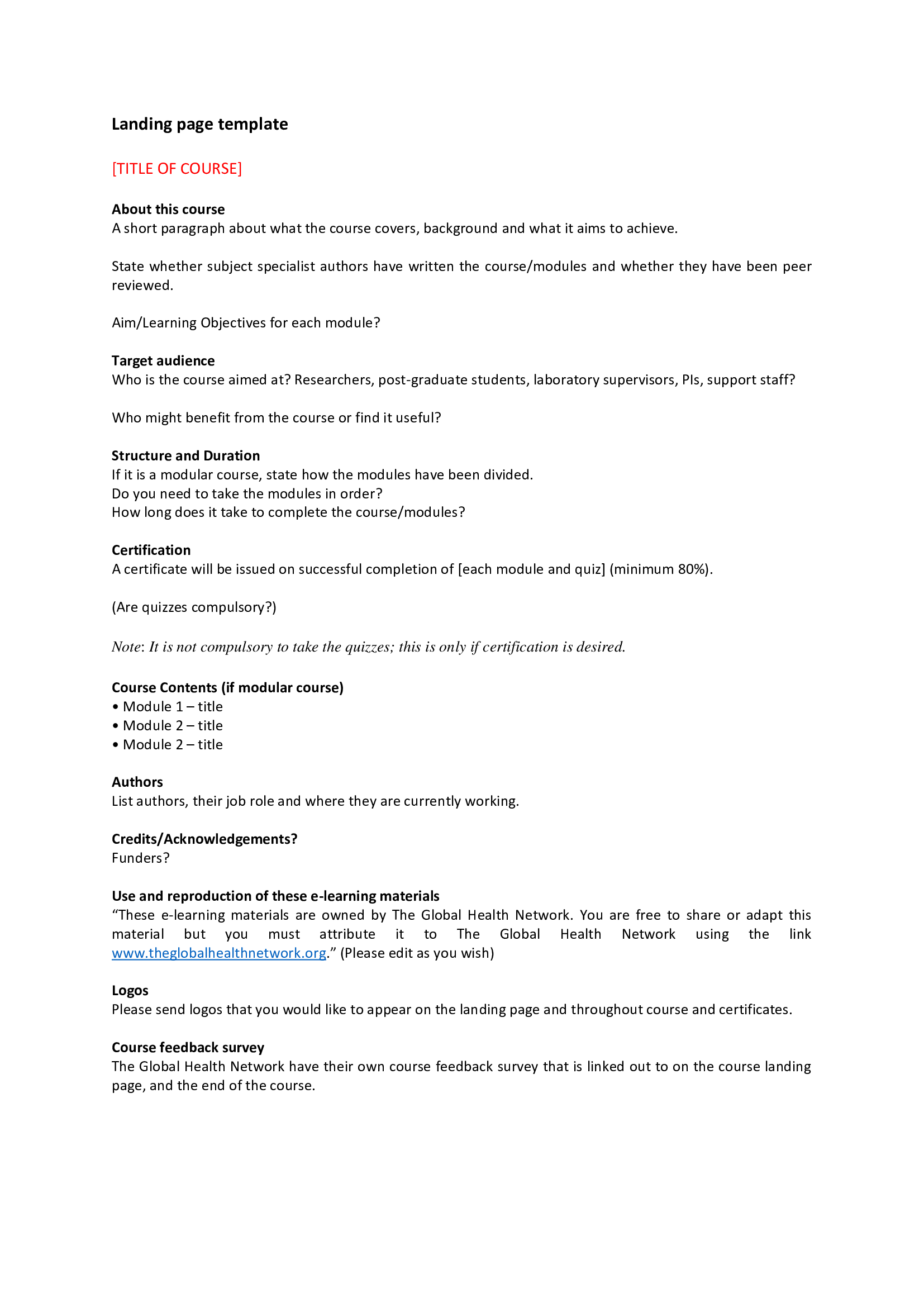
Appendix 3 - Course landing page template (Click to download)
|